
Many businesses in Singapore invest in a backup generator only after experiencing an unexpected power outage. Unfortunately, rushing the decision often leads to buying a generator that is either too small to support critical equipment or unnecessarily large for actual power needs.
A common example is an F&B outlet that purchased a generator before the monsoon season. When the first outage occurred, the generator struggled to power kitchen appliances, refrigeration units, lighting, and air conditioning at the same time. The equipment itself was functioning properly, but its capacity simply wasn’t sufficient to handle the startup demand.
Situations like this are more common than many business owners expect. In most cases, the problem isn’t the generator. It’s inaccurate load planning.
This guide explains how generator sizing works, highlights common mistakes businesses make, and provides practical tips for selecting the right backup generator without overspending.
Why Backup Generator Sizing Is Often Incorrect
Many people assume that generator sizing is as simple as adding together the wattage shown on equipment labels. In reality, several important factors affect the final calculation.
One of the biggest mistakes is ignoring the difference between running load and starting load.
Equipment such as air conditioning systems, refrigeration compressors, pumps, and electric motors require significantly more electricity during startup than they do while operating normally. In many cases, startup power can be two or even three times higher than the continuous running load.
A generator selected based only on running wattage may overload or shut down when several motor driven systems start simultaneously.
Another common mistake is treating every electrical load as equally important.
During a power outage, not every device needs to remain operational. Critical systems such as security equipment, server rooms, emergency lighting, refrigeration, and medical equipment often require uninterrupted power, while less essential equipment can remain switched off until normal electricity is restored.
Separating essential and non essential loads allows businesses to choose a generator that is both reliable and cost effective.
The Risks of Choosing the Wrong Generator Size
Selecting the wrong generator capacity can create operational and financial problems.
A generator that is too small may experience frequent overloads, unstable voltage, unexpected shutdowns, and increased maintenance costs. It can also reduce the lifespan of connected equipment.
On the other hand, an oversized generator is not always the better choice. Generators perform most efficiently within an appropriate load range. Running a large generator under a consistently light load can increase fuel consumption, reduce efficiency, and contribute to unnecessary engine wear.
Choosing the correct generator size helps balance reliability, operating costs, and long term performance.
How to Calculate the Right Generator Size
Instead of relying on rough estimates, businesses should perform a structured load assessment before selecting generator capacity.
Create a Complete Equipment List
Begin by listing every electrical device that may need backup power.
This typically includes:
- Lighting systems
- Air conditioning units
- Refrigeration equipment
- IT infrastructure
- Water pumps
- Manufacturing machinery
- Security systems
- Office equipment
Record both the running wattage and starting wattage wherever applicable.
Identify Critical Loads
Determine which equipment must continue operating during a power outage.
Many businesses choose to power only essential operations instead of the entire building. This approach often reduces generator size while lowering fuel consumption and installation costs.
Consider Startup Power Requirements
Electric motors require additional current when starting.
The generator should be capable of supporting the largest startup surge while continuing to power all other essential equipment already in operation.
Ignoring this factor is one of the most common causes of generator failure during an outage.
Allow Room for Future Growth
Businesses frequently expand their operations by adding machinery, cooling systems, or office equipment.
Including extra capacity during the initial sizing process can prevent the need to replace the generator as power requirements increase.
Choosing the Right Generator for Your Business
Generator capacity is only one part of the decision. Selecting the right generator type is equally important.
Standby Generators
Standby generators are permanently installed and automatically start when the main power supply fails.
They are commonly used by:
- Hospitals
- Data centres
- Manufacturing facilities
- Commercial buildings
- Hotels
- Office complexes
These generators provide uninterrupted backup power for businesses where downtime is not an option.
Portable Generators
Portable generators are ideal for temporary applications.
They are widely used for:
- Construction projects
- Outdoor events
- Temporary work sites
- Emergency maintenance
- Seasonal operations
Because they can be transported easily, portable generators offer flexibility for businesses that do not require permanent backup power.
Construction projects often require multiple types of equipment operating simultaneously. Besides supplying electricity, workers may also need elevated access equipment such as scissor lifts for installation or maintenance work.
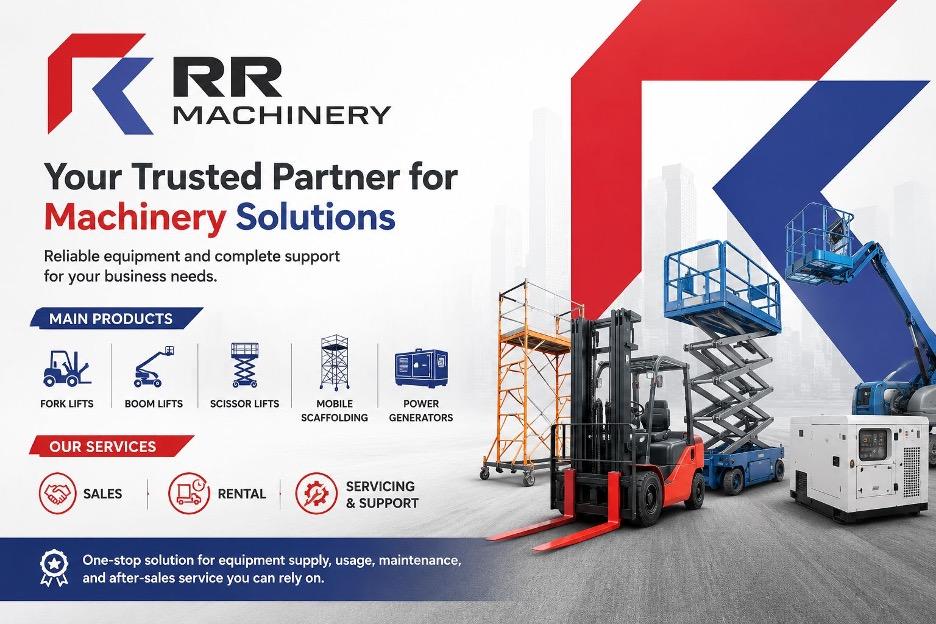
Working with a supplier such as RR Machinery allows businesses to source both generators and access equipment from a single provider, making project planning and logistics much more efficient.
Choosing the Right Fuel Type
Fuel type also plays an important role when selecting a backup generator.
Diesel generators remain one of the most popular options because they offer excellent fuel efficiency during continuous operation and perform well under heavy electrical loads.
Gas powered generators are sometimes preferred where lower emissions and quieter operation are priorities.
The best choice depends on operating hours, maintenance requirements, fuel availability, and local regulations.
Generator Maintenance Is Just as Important
Even a correctly sized generator can fail if it is not properly maintained.
Backup generators often sit unused for long periods. During this time, batteries can lose charge, fuel quality may deteriorate, filters become dirty, and mechanical components gradually wear.
Routine maintenance should include:
- Load testing
- Battery inspection
- Fuel quality checks
- Oil replacement
- Filter replacement
- Cooling system inspection
Regular servicing ensures the generator performs reliably when an actual power outage occurs.
Renting or Buying a Generator
Purchasing a generator is not always the most practical solution.
Businesses with temporary projects, seasonal operations, or short term power requirements often find generator rental to be more economical.
Renting eliminates ownership costs such as storage, maintenance, depreciation, and long term servicing while allowing businesses to choose equipment that matches each specific project.
For construction projects requiring both temporary power and elevated work access, combining generator rental with Scissor Lifts Rental Singapore can simplify equipment planning, delivery schedules, and supplier coordination.
Frequently Asked Questions
How much larger should a generator be than my calculated load?
Most businesses include additional capacity above their calculated peak demand to accommodate startup currents and future expansion. The exact margin depends on the equipment being powered and expected business growth.
Can one generator power an entire building?
Yes, it is possible. However, many businesses choose to power only essential systems during an outage. This approach reduces the required generator capacity and lowers operating costs.
How often should a backup generator be tested?
Regular load testing is recommended to ensure the generator starts and operates correctly during an emergency. Generators that remain unused for long periods are more likely to experience starting or performance issues if they are not tested routinely.
Is a diesel generator always the best option?
Not necessarily. Diesel generators are highly suitable for continuous and heavy duty applications, while gas powered generators may be a better choice where lower emissions or quieter operation is required.
Should construction companies rent or purchase generators?
For temporary projects, renting is often the more practical solution. It reduces ownership costs while allowing contractors to select equipment that matches the specific power requirements of each project.