
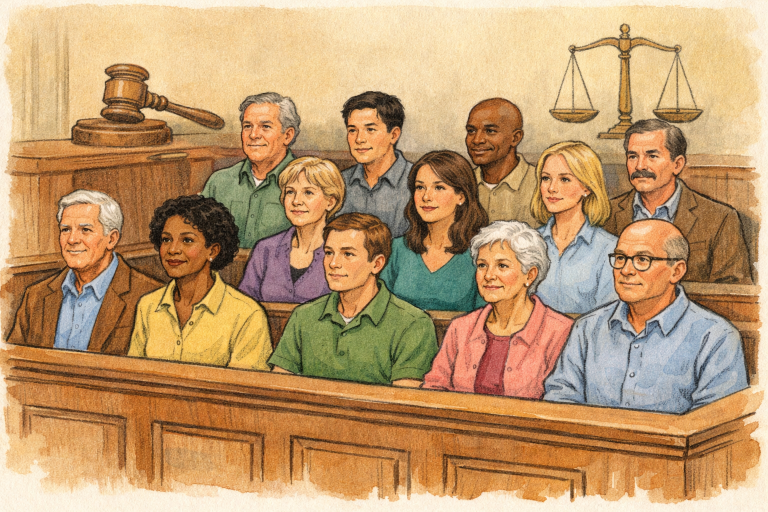
Jury selection is foundational to the integrity and fairness of our judicial system. Ensuring that selected jurors accurately represent their communities not only determines outcomes in courtrooms but also signals the strength of our democratic institutions. As recent developments, such as the Louisiana vs. Callais Voting Rights Act case, demonstrate, the way juries are chosen continues to have high stakes for civil rights and participatory democracy. By refining jury selection practices, we can nurture public trust in the justice system and help protect fundamental rights.
Modern democracy depends on unbiased and representative participation at every level, particularly in the legal system. A fair trial relies on a diverse jury, which can collectively weigh evidence and deliberate without prejudice. These ideals require ongoing vigilance, as historical and present-day biases can skew jury composition and erode confidence in verdicts. Ensuring transparency and ongoing reform in jury selection is a key part of maintaining legitimacy in our courts and beyond.
Across the United States, legal scholars and advocates argue that persistent obstacles, ranging from implicit racial and economic biases to outdated administrative processes, still limit equitable jury service. As court reforms gain momentum, new approaches to jury pool assembly, such as expanding recruitment sources and integrating anti-bias training, are being tested to safeguard the principle of equal justice for all. These reforms recognize that each step toward inclusion also strengthens society’s trust in legal outcomes.
The importance of these reforms goes beyond simple procedure. The power to decide guilt or innocence, and even to uphold important laws, rests with jurors. Achieving a more equitable system of jury selection gives every citizen a proper voice in the legal process, underlining democracy’s core promise of fairness. This ongoing work continues to shape the future of justice in America.
Importance of Diverse Juries
Diversity on juries is vital for ensuring fairness and minimizing bias in trials. When a jury reflects the broad makeup of its community, it gains not only varied experiences but also a range of perspectives that are critical during deliberations. Research has consistently shown that diverse juries deliberate more carefully, ask more questions, and are less susceptible to groupthink compared to homogeneous panels. By broadly reflecting the community’s demographics, the jury process becomes more legitimate in the eyes of both defendants and the public.
Homogeneous juries, on the other hand, are more prone to overlook or unconsciously accept prejudices that can distort outcomes. In high-profile trials and matters involving civil rights, it is especially crucial to have juries that accurately reflect the country’s diversity. A system that enables or ignores imbalanced representation risks undermining trust in verdicts and in the legal system as a whole. The New York Times highlights the elevated importance of diverse juries in upholding justice amid ongoing civil rights challenges.
Challenges in Current Jury Selection
Despite recognition of the benefits of diverse juries, current selection processes face significant challenges. Racial discrimination and the exclusion of people of color from juries have been persistent issues, severely impacting trust in the justice system. A report from Berkeley Law’s Death Penalty Clinic revealed that racial bias is deeply entrenched in jury selection practices, with prosecutors using various strategies to exclude nonwhite jurors either directly or through indirect means such as dismissals for purported “cause.” Phys.org discusses the continuing role of racial discrimination in modern jury selection.
Additionally, logistical barriers and outdated methodologies loom large. Relying on voter rolls or driver’s license records alone for jury pools is increasingly problematic, as these databases may exclude large swathes of younger citizens, non-drivers, and those from marginalized communities. Although some states have begun expanding their recruitment criteria, such practices are far from universal.
Recent Reforms and Their Impact
To address these persistent issues, several states have initiated meaningful reforms. One prominent example is New Jersey, which has started collecting detailed demographic data on jurors to monitor and promote diversity. Rather than depending solely on voter registration lists, New Jersey draws from state labor records and other sources, greatly broadening the potential jury pool. This approach makes it more likely that every community segment is represented, helping foster confidence in the process and outcomes.
Equity and transparency are central to these innovations. Providing data on the makeup of jury pools allows for ongoing assessment of progress and identification of lingering gaps. This kind of reform not only benefits the parties directly involved in trials but also sets a model for other jurisdictions seeking to strengthen civic participation through the courts.
Case Study: New Jersey’s Approach
New Jersey’s reforms have gone beyond expanding jury lists. The state has implemented implicit bias training targeting judges, lawyers, and court staff to reduce the influence of unconscious prejudice during voir dire (the preliminary examination of potential jurors). By recognizing and addressing implicit biases up front, the courts aim to make selection processes more objective and less susceptible to unlawful discrimination.
This proactive stance enables the state to tackle jury selection injustice more systematically. As a result, improvements in diversity and fairness in jury composition are being realized, demonstrating the tangible impacts that well-designed reforms can deliver for democratic governance.
The Role of Implicit Bias Training
Implicit bias, the unconscious attitudes or stereotypes affecting understanding and actions, can have profound effects on jury selection. Even well-meaning legal professionals may unknowingly make decisions that disfavor certain groups. By mandating regular implicit bias training, courts can increase awareness and encourage more equitable deliberations in juror selection. This crucial step is part of a growing nationwide call for accountability and fairness throughout the justice process.
Economic Barriers to Jury Service
Jury service should be accessible to every citizen, but economic factors often create insurmountable barriers. Low rates of juror compensation can deter those in lower income brackets from serving, skewing jury pools toward those with the financial means to miss work. Such imbalances undermine the principle of equitable participation. Raising juror pay and providing workplace protections are necessary measures to correct this disparity, ensuring that individuals of all economic backgrounds have a genuine opportunity to participate in the justice system.
Future Directions for Jury Selection
The path forward will require innovation and renewed dedication to inclusion. Expanding jury pool sources to include tax records, public assistance rolls, and other databases can help capture the full spectrum of eligible citizens. Additionally, reconsidering exclusionary laws, such as those barring individuals with certain criminal convictions, can help rectify historical imbalances and reflect a more rehabilitative approach to justice.
Ongoing public education and transparent data sharing will be critical in holding the system accountable and keeping the focus on continuous improvement. As momentum builds, community involvement and oversight can help ensure reforms actually deliver on the promise of equal participation in jury processes.
Conclusion
Modernizing and refining jury selection is fundamental to the health of democratic institutions. By facing down barriers of racial bias, economic exclusion, and administrative inertia, the judicial system can begin assembling juries that genuinely reflect society’s composition. Through vigilance and ongoing reform, we uphold not only the right to a fair trial but also the deeper democratic principles that underpin justice for all.